Helmets Save Lives

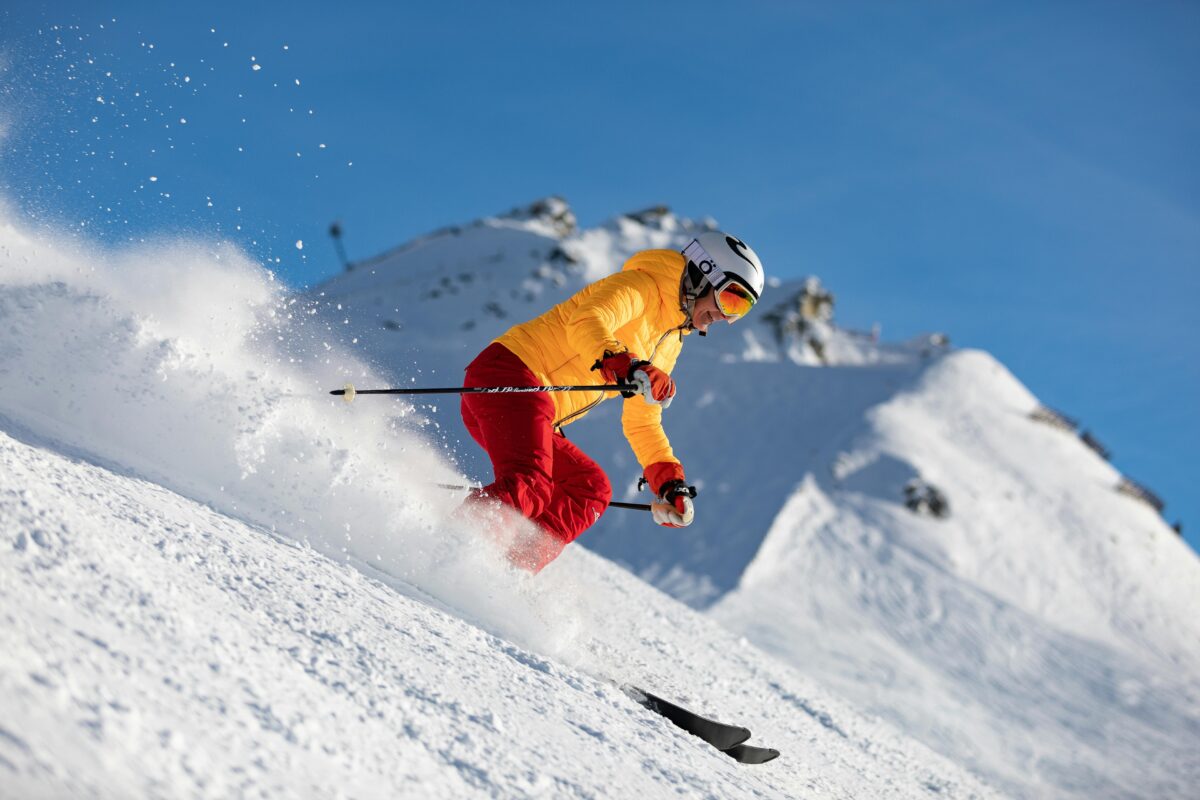
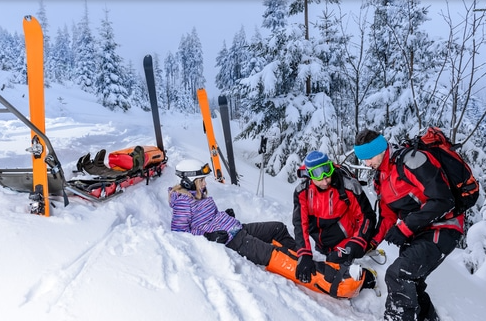
We always hear about the importance of wearing a helmet when riding a bicycle, motorcycle, scooters and skateboards, but we rarely consider the importance of wearing one when skiing or snowboarding. Skiing and snowboarding are considered high intensity sports and participating in these sports can lead to serious injuries. According to The New York Times, wearing a helmet when skiing has reduced head injuries such as fractured skulls, facial lacerations and head lacerations by 50%.

Research shows that in 2003 only 25% of individuals were wearing helmets when hitting the slopes. In 2013, the number had gone up to 70%. The number of head injuries on the slopes has not declined, but the severity of those injuries has improved. Although ski resorts don’t require the use of a helmet, The National Ski Areas Association (NSAA) advocates the use of helmets, especially for children. The NSAA states that helmets may be the difference between a major and minor head injury. This is especially important for developing children.

Wearing a helmet while skiing is vital for childrencThey have less developed motor control and decision-making skills necessary to stay safe. Children are not able to determine distance, speed and when to brake, unlike fully developed adults. This is true for sledding as well. Studies show that head trauma accounts for 34% of injuries from sledding. Children also run the risk of being struck by a skier or snowboarder that is much bigger, heavier and faster, which can result in serious injuries.

Last month an 8-year-old boy died during a ski accident in Connecticut. The young boy attempted to drop into a half pipe that was 3-4 feet tall. The boy’s legs and feet came out from underneath him and he struck his head on the inside of the half pipe. He died of blunt impact injury to the head and his skull was fractured. He was not wearing a helmet.

Consider the following when skiing or riding:

  • For every 10,000 people on the slopes, three people will sustain a head injury requiring medical attention.
  • 30-50 percent of head injuries can be reduced by helmets. Wearing a helmet may be the difference between life and death.
  • Alpine skiers are three times more likely than a snowboarder to be involved in a collision.

Colorado Ski Law

Colorado’s “Ski Safety Act,” located at Colo. Rev. Stat. Ann. §§ 33-44-101 to -114 provides for skier assumption of inherent dangers, and creates statutory duties for skiers and operators. Skiers, inclusive of sledders and snowboarders, have duties to ski within their abilities, with uphill skiers having a primary duty to avoid collision. Breach of skier duties constitutes negligence.

No distinction is drawn between young children and adults in application of the Act, such that the common law, particularly that young children can not commit negligence nor assume a risk, has been arguably abrogated. In a 2003 statutory amendment, parents were expressly permitted to waive or release a child’s claim in negligence. Colo. Rev. Stat. Ann. §§ 13-22-107, as added by Laws 2003, Ch. 262, § 1, eff. May 14, 2003 (reversing the conclusion of Cooper v. Aspen Skiing Co., 48 P.3d 1229 (Colo. 2002) that such a waiver violated public policy and created an unacceptable conflict between parent and child).

In actions arising from skier/skier collisions, such a collision is considered neither an inherent or assumed risk. Id. at § 33-44-109(1). Ski area operators have specific duties to mark trails and provide some other warnings. There is no duty to pad lift towers. Operator breach of a statutory duty constitutes negligence, and is not considered an inherent danger to which liability limitations apply. Id. at §§ 33-44-103(3.5), 33-44-104(2).

Limitations are imposed on damages collectible against ski area operators for downhill skiing accidents, but no such limitation on damages exists for lift accidents. A tramway board is separately formed by Colo. Rev. Stat. Ann. §§ 24-34-101 et seq, and tramways are otherwise regulated under the “Passenger Tramway Safety Act,” Colo. Rev. Stat. Ann. §§ 25-5-701 et seq. Volunteer ski patrol members are granted civil immunity for acts or omissions in the provision of emergency services or assistance, so long as members act in good faith. Colo. Rev. Stat. Ann. § 13-21-108(3).

Snowmobile use is subject to the duties enumerated in Colo. Rev. Stat. Ann. §§ 33-14-101 to -116, the breach of which is handled as negligence per se. The Ski Safety Act was amended in 2004 in several significant respects. Laws 2004, Ch. 341, § 3, eff. May 28, 2004. Skiers continue to assume the “inherent dangers and risks of skiing.”
However, where such dangers and conditions were once only those that were an “integral part” of the sport, the 2004 amendments have modified the language to include all those that are “a part” of the sport. Colo. Rev. Stat Ann. § 33-44-103(3.5), as amended.

Arguably, the omission of the word “integral” could be read broadly to mean without regard to the negligence or lack of care by an operator assumption of practically all hazards. Under Colo. Rev. Stat. Ann. § 33-44-108(2), as amended, the operator’s duty to post a sign warning of maintenance equipment on an open slope or trail was narrowed to exclude maintenance equipment en route to or from a grooming project. The Amendments eliminate the ski area operator’s prior duty to mark “danger areas”, and includes cliffs and other unmarked dangers as one of the “inherent dangers” of the sport.

Additionally, ski area operator immunities have been expanded to include all ski area property, not just those areas designated for skiing or competition.

What is a Ski Collision Case?

What is a ski collision case?

Skiing is not a contact sport and being blindsided by another skier or snowboarder is not an inherent risk under either Colorado or Utah law. Colorado law presumes that the uphill skier or boarder is at fault in a skiing accident, because the overtaking skier has the primary duty to avoid the skier below. In Utah, skiers are required to exercise “reasonable care” to avoid collisions. Usually, this also means the uphill skier must yield to skiers below.

Thus, one of the key issues in any skier/skier case is who was the uphill or overtaking skier. The nature of the injury often gives substantial clues as to how the ski accident occurred, the speed at which the skiers were skiing, and the relative angles to each other.

All skiers are under a general duty to ski cautiously, within their ability and to maintain control and a proper lookout. If a skier fails to ski in control or to maintain a lookout, the skier is negligent and responsible for the injuries and damages that result from the collision

What makes a ski collision case unique?

Many people, including inexperienced lawyers, view a ski collision as just “a car crash on the slopes.” This is an inaccurate characterization for a number reasons, including the dynamics of the accident itself and the laws determining liability. Your best outcome will be achieved by an attorney who not only skis, but also knows the trails and terrain at the Colorado ski areas, and has experience in ski accident reconstruction.

Additionally, the severity of the orthopedic injuries suffered distinguish many ski injuries – long bones and joints are often shattered, requiring extensive, long-term care to reach maximum medical improvement. Studies suggest that over thirty percent of skier collisions result in head injuries. Many of these skiing accident injuries leave some form of permanent impairment. Insurance coverage is typically more complicated than that for motor vehicle accidents as well.

Skiing is not an inexpensive sport to enjoy. Most regular skiers own their homes and thus have homeowner’s insurance coverage which provides coverage for ski accidents. But if the hitter is a young adult, gaining coverage under the parents’ homeowners’ insurance may be a fight depending on the specific facts.

What to expect from a ski collision lawsuit?

Ski safety laws in most states require individuals involved in skier/skier collisions to stop at the scene, render aid and to give their name, address, and identification. Yet, we receive numerous calls each year from skiers who were injured by another’s reckless skiing and that injured skier is unable to identify or name the reckless skier involved. Do not rely on ski patrol or ski area operators to get this information for you because in most cases, they are under no legal duty to obtain the information.

Generally, ski patrol will compile a relatively comprehensive report concerning the nature, location, and causes of a skier/skier collision. But you may not be provided a complete copy of the accident file without legal representation, many ski area operators will only produce the complete file in response to a subpoena from an attorney.

Medical expenses can easily run into six-figures. The nature of the injuries suffered in a ski collision often means expensive accommodations are needed over a long-term period. Other expenses which arise include future medical expenses, often coupled with a loss of income if the victim was previously employed. Usually the worst parts of the injury are the pain, the difficulty during recovery, and sometimes even a permanent impairment. The injured victim may seek compensation from the liable party for all of these expenses

Trust The Real Experts

The injury rate for recreational skiers and snowboarders is approximately 1.37 per 1,000 skier/snowboarder visits. In Colorado, this translates to about 25,000 injuries, from minor to severe, each ski season. Snowboarders and skiers suffer different types of injuries, but their statistical likelihood of an injury is equivalent. Despite common misconceptions, snowboarders are neither more dangerous nor more likely to be injured than skiers.

About 5% of all skiing injuries are due to collisions. The uphill or overtaking skier (or rider) has the primary duty to avoid the skier who is downhill. When entering or crossing a trail, a skier must yield to skiers already on the trail. Skiers must maintain a lookout and ski in control and within their ability. And, what should be obvious, do NOT drink alcohol or smoke pot and ski. Following these rules would prevent most skier collision injuries and in severe cases, deaths.

The Colorado Ski Safety Act requires all parties to a collision to stay at the scene and give their name and current address to ski patrol. We recommend that you never ski or ride alone. It’s important to carry your cell phone and a trail map so you can call for help and provide your location on the mountain. If there is an accident, stay calm. Keep the injured person warm and don’t move them. At a large ski area on a busy holiday weekend, it can take time to get help.

The Ski Act also provides that an injured skier can sue for damages if he or she is hurt by an out-of-control skier. Skiing is not a contact sport.

A good case study is that of Jim S., of Illinois.

It was President’s Day weekend 2017. Clear skies. Good snow. Big crowds at Breckenridge.

For years, Jim had been an Epic pass holder. He began skiing as a teenager. He was in excellent condition—sixty-three years old, six-feet tall, 175 lbs. On the third day of his trip, he met up with Mike, a friend of his from Illinois. Mike was wearing a Go-Pro camera. At about 11:30, they were in the lift-line for the Colorado Super Chair. Jim was wearing black ski pants, a blue parka and a black helmet.

Meanwhile, a 39-year old snowboarder from Texas named “J.P.” was close by in the lift-line for the Rocky Mountain Super Chair. J.P. identified himself as an expert snowboarder. He started his morning with a mimosa.

After Jim and Mike got off their chair, they pushed off down Columbine. Mike clicked record on his Go-Pro. In the video, you can see as Mike and Jim skied on Columbine past several SLOW SKIING signs. They crossed under the Rocky Mountain Super Chair probably just moments after J.P. had unloaded and turned down Columbine himself. 200 yards further down Columbine, just as it comes to the top of Duke’s run, Mike’s Go- Pro video shows J.P. come into view, riding much faster than any other rider on Columbine and passing Mike.

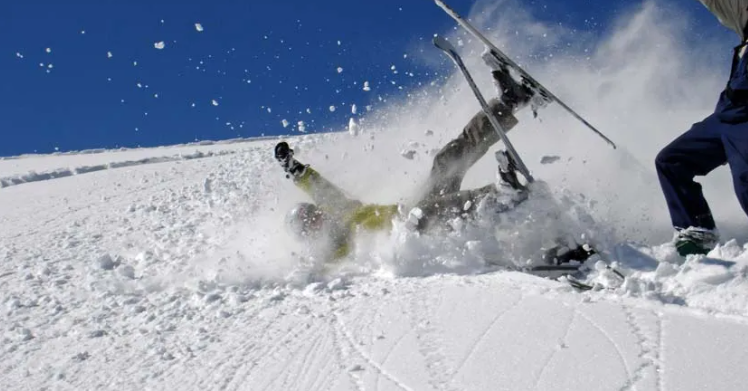
The video then shows J.P., as he quickly overtakes Jim S., and crashes into him from uphill. Jim fell hard on his left side, severely fracturing his left hip and shoulder. He clutched at his hip in pain, as Mike’s Go-Pro video continued its recording. Ski patrol evacuated Jim off the mountain and he was transported to the hospital for emergency hip surgery (with hardware). Two days later, his shoulder was surgically repaired. Jim’s medical expenses were nearly a quarter million dollars and he lost over a hundred thousand dollars of income as he recovered. His doctors told him his hip and shoulder would never work the same again. Jim hired our law firm to get compensation for his injuries. After discovery and before trial, Jim S. accepted a policy limits $1,500,000 settlement. It was paid by J.P.’s homeowner’s insurance that he carried on his house in the Dallas suburbs. The at-fault skier’s homeowner’s insurance typically covers cases like these.

Jim doesn’t ski anymore. He walks with a limp and his left shoulder doesn’t work as well as it did pre-accident. But, Jim doesn’t let his injuries keep him down. He puts his energy into charitable projects, including, Concern Worldwide US; and of course he spends a lot of time with his family. Ski and ride safely this season. If you need more information, go to SKILAW.COM, or call our team directly at 720.790.4177.

The Original Ski Lawyers

LINDA:

In 1980, Jim Chalat published a law review article about the Colorado Skier Safety Act. It had been enacted in 1979 in order to protect ski area operators from liability in cases involving the “inherent risks of skiing. Since then, we have developed a practice area concerning skier accidents. In 1998, I created and now manage the website: SKILAW.COM. The site is devoted exclusively to the skier accident practice at our firm. We advocate at the legislature for skier safety and Jim, Evan and Russell speak, teach and publish in the field of recreational accidents and the law. 

JIM:

The ski industry in Colorado has changed. It is now a major corporate enterprise. Approximately 80% of the 13 million annual skier days in Colorado are controlled by four major corporations, each with billions in assets, and millions of customers. Vail Resorts Inc (Ticker: MTN) controls 5 ski areas in Colorado on about 35,000 acres of federal land under Special Use Permits. Aspen Ski Co. operates on 7,800 acres of USFS land in the White River Forest. Aspen is a partner in Alterra Mountain Co., which in turn operates Steamboat and Winter Park. Powdr Corp. operates Eldora and Copper Mtn. All 4 of these resorts occupy public land. For the skiers and snowboarders, things have changed as well. Some things are better. In most cases lifts are safer and faster. Ski and snowboard equipment and clothing have improved. Safety has improved—largely because of the almost universal use of helmets. But still, this ski season, we can reliably predict that about 17,000 skiers or snowboarders will sustain injuries on the slopes. Of those, probably a dozen people will be catastrophically injured – spinal cord (SCI) traumatic brain (TBI), or severe orthopedic injuries. Snowboarders and skiers suffer different types of injuries, but their statistical likelihood of an injury is equivalent. Despite common misconceptions, snowboarders are neither more dangerous nor more likely to be injured than skiers.

EVAN:

How you can best protect yourself and your family? About 5% of all skiing injuries are due to collisions. The uphill or overtaking skier (or rider) has the primary duty to avoid the skier who is downhill. When entering or crossing a trail, a skier must yield to skiers already on the trail. Skiers must maintain a lookout and ski in control and within their ability. Wear good goggles so that you can see where you are going. Maintain your equipment so you can stop and turn. Don’t ski alone. Adjust your bindings to the correct DIN. And, what should be obvious, do NOT drink alcohol or smoke pot and ski or ride. Following these rules would prevent most accidents. The Colorado Ski Safety Act requires all parties to a collision to stay at the scene and give their name and current address to ski patrol. We recommend that you never ski or ride alone. It’s important to carry your cell phone and a trail map so you can call for help and provide your location on the mountain. If there is an accident, stay calm. Keep the injured person warm and don’t move them. Stop the bleeding, keep them breathing, knowing a little 1st aid is a good idea for any outdoor activity. At a large ski area on a busy holiday weekend, it can take time to get help. The Ski Act also provides that an injured skier can sue for damages if he or she is hurt by an out-of-control skier. Skiing is not a contact sport.

RUSSELL:

Our case of James v. J.P. is a cautionary example. It was President’s Day weekend 2017. Clear skies. Good snow. Big crowds at Breckenridge. Our client, James, was a long-time skier, in in excellent condition—sixty-three years old, six-feet tall, 175 lbs. He rode the Colorado Super Chair to the Columbine trail. A 39-year old snowboarder named “J.P.” was close by in the lift-line for the Rocky Mountain Super Chair. J.P. self identified himself as an expert snowboarder. He had started his morning with a mimosa. The skiing companion of James caught it all on his GO-PRO. As James was making his way on an intermediate trail J.P.overtakes James and crashes into him from uphill. James fell hard on his left side, severely fracturing his left hip and shoulder.. Ski patrol evacuated Jim off the mountain and he was transported to the hospital for emergency hip surgery (with hardware). Two days later, his shoulder was surgically repaired. His medical expenses were nearly a quarter million dollars and he lost over a hundred thousand dollars of income as he recovered. His doctors told him his hip and shoulder would never work the same again. He hired CHALAT HATTEN & BANKER to get compensation for his injuries. After discovery and before trial, we accepted a policy limits $1,500,000 settlement. It was paid by J.P.’s homeowner’s insurance which typically covers cases like these.

$675K Settlement in Snowmass Ski Accident Case

A.S. was skiing on Sandy Park, an intermediate ski trail at Snowmass Resort at 2:20 PM on Thursday, March 1, 2018.
Cohen was uphill of A.S., flew over a roll and took A.S. out. In the Collision Report Form, ski patrol quoted A.S. at the
scene immediately after the collision saying “I got hit in the back.”

A.S. sustained multiple right-sided rib fractures, thoracic bleeding and collapsed lung (hemopneumothorax), a right
clavicular displaced fracture, and associated pulmonary injury. He spent four days in Aspen Valley Hospital, all in ICU.
Aspen Valley Hospital could not manage the hemopneumothorax and emergently transferred him to St. Anthony
Hospital in Lakewood, CO. He would spend an additional twenty-one days there.

A lawsuit was filed by Chalat Hatten & Banker, but the claims were settled before trial for $675,000.
Partner Russell Hatten was the lead attorney on the case.

$300K Settlement in Reckless Skiing Accident

A group of co-workers went on a ski trip; P.B. was the least experienced of the group. One in the group found delight in knocking down other skiers and recording it on a GoPro. When the jokester hit P.B., the collision broke his shoulder.

Final diagnosis was a fractured humeral head requiring surgery. P.B. lost about a week of wages, feared retaliation
since the hitter was a superintendent at the police department where P.B. worked.

Partner Evan Banker represented P.B. in this matter and achieved a $300K settlement on his behalf.

Past results are not a guarantee of future results.

$305,000 Settlement in Steamboat Ski Collision Case

Blue skies on Heavenly Days at Steamboat one March morning in 2019. Our client, an 85 year-old-husband and past-president of Steamboat Ski Corps in the 80s, was skiing with a friend. Another skier ran into him from behind, causing a brain bleed. Our client was airlifted for brain bleed to Anschutz, ICU, and then transferred to neurology after for four days. Client is only a moderate skier now, as he needs to be very careful when undertaking physical activity.

Partner Evan Banker represented our client in this matter and achieved a $305,000 settlement on his behalf.

Past results are not a guarantee of future results.

$303K Settlement in Copper Mountain Ski Collision Case

Our client, an Orthopedic Surgeon, was struck from behind by an out of control skier on Rhapsody Run at Copper Mountain on 11/24/19. Client had slowed for a “slow zone” and described the collision as being “hit by a truck.” Client suffered multiple fractures and was hospitalized for 6 days at St. Anthony’s. He lost consciousness and suffered multiple fractures including ribs and a separated clavicle which required surgical repair. The accident prevented our client from returning to his busy orthopedic practice for several weeks.

Our client was represented by partner Jim Chalat. Jim secured a $303K settlement on his behalf.

Past results are not a guarantee of future results.

$307,500 Settlement for Skier Injured at Aspen

Our client was skiing Lower Ruthie’s Run at Aspen when he was hit in the back by the defendant, who was skiing with his children, possible chasing them. The collision resulted in injuries including left rotator cuff tear, broken ribs and casting of left hand.

Partner Russell Hatten represented our client in this matter and achieved a $307,500 settlement on his behalf.

Past results are not a guarantee of future results.