
Fewer Skiers, Same Dangers: Colorado’s 2025–26 Ski Season in Review

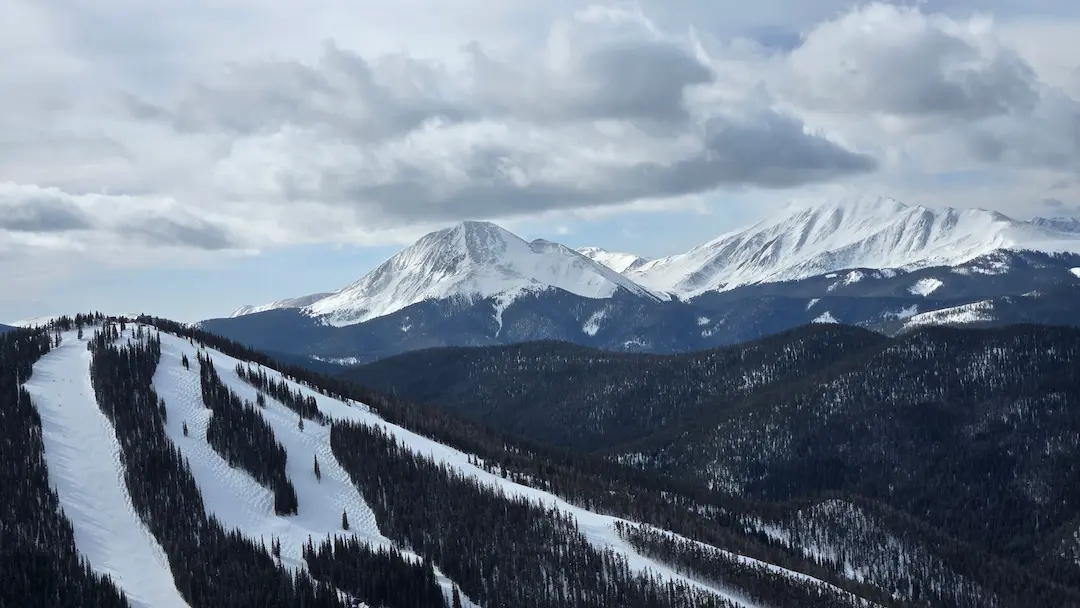
Colorado’s 2025–26 ski season was defined by a paradox. The mountains were quieter than they had been in years. Parking lots filled later, lift lines shortened, and I-70 traffic eased. But the death toll held steady and the courtrooms grew louder. After last season’s record crowds and the landmark Colorado Supreme Court ruling on liability waivers, this winter delivered something different: a jury verdict that finally tested those new legal limits, a follow-up case pending before the state’s highest court, and the first federal antitrust action ever filed against the two companies that dominate American skiing.
Key Takeaways
- At least 13 men died on Colorado slopes in 2025–26, spread across 11 ski areas. All were male, ranging in age from 25 to 74, and the deceased included 12 skiers and one snowboarder.
- Deaths are the visible tip of a much larger injury picture. Industry data put the national injury rate at roughly 46.8 per 1,000 skier visits in 2022-23, meaning tens of thousands of injuries across Colorado in a typical season. Trauma-center data suggest the real number is higher than resorts publicly acknowledge.
- Nine of those 13 deaths were trauma-related, all from collisions with trees or falls. None resulted from skier-on-skier collisions, raising hard questions about snowpack and surface conditions.
- National skier visits fell roughly 14% to 52.6 million, the second-largest annual decline in industry history. Average national snowfall was the lowest in over a decade.
- A Colorado jury awarded paralyzed skier Annie Miller $12.4 million in September 2025. The verdict was the first to actually pierce a resort liability waiver under the new precedent set by the Colorado Supreme Court.
- Litterer v. Vail Summit Resorts is now pending before the Colorado Supreme Court, testing whether a waiver signed after an injury can extinguish an active lawsuit.
- A federal antitrust class action was filed in Denver in March 2026 against Vail Resorts and Alterra Mountain Company. It is the first such case ever brought against the two companies behind the Epic and Ikon passes.
- The lap-bar debate remains unresolved. Donovan Romero’s death at Keystone in May 2025 sparked calls for a state law mandating restraint bar use, but no such legislation has passed.
A Quieter Mountain Isn’t a Safer One
After a record-breaking 2024–25 campaign, Colorado’s mountains went quiet this winter. National skier visits dropped to roughly 52.6 million, down from 61.6 million the prior year. That 14% decline ranked as the second-largest annual drop in industry history. Average national snowfall came in at about 112 inches, well below the 10-year average of 169 inches and the lowest figure in more than a decade.
Colorado was hit particularly hard. A slow start gave way to mid-winter rain at base areas and ended with record warmth in March that closed terrain early at several resorts. By the time the lifts stopped spinning, the Colorado Sun reported at least 13 deaths on the state’s slopes, a number similar to last season in raw terms. But context matters. With sharply lower visitation, the per-visit fatality rate didn’t fall the way crowds did. The mountain claimed roughly the same number of lives with significantly fewer people on it.
That is the question this season forces the industry to confront: when the snow is bad, is the skiing more dangerous?
The Snow Story: When Less Is More Dangerous
There is a counterintuitive answer emerging from this season’s data, and it deserves attention from anyone who straps into a chairlift in Colorado.
When natural snowfall is scarce, resorts lean heavily on artificial snowmaking. Machine-made snow is not the fluffy western powder Colorado is known for. Researchers and athletes have noted that it is significantly denser, icier, and harder than natural snow. Falls on hard-packed surfaces generate more violent impacts. Skiers reach higher speeds on groomed corduroy laid over a manufactured base. When something goes wrong on that kind of surface, it tends to go wrong harder.
The 2025–26 numbers fit the pattern. Of the 13 reported deaths in Colorado, nine were trauma-related: collisions with trees, or falls. None were skier-on-skier collisions, which historically had driven a meaningful share of the state’s fatality count. Several of the deaths occurred on intermediate, groomed terrain rather than out-of-bounds or extreme runs, a profile consistent with high-speed crashes on hard surfaces rather than reckless skiing in difficult terrain.
The implication is worth sitting with. In a year when the mountains were less crowded than they had been in nearly two decades, the trauma-related death toll did not meaningfully decline. Surface conditions, snowpack quality, and the speed of skiing on hard manufactured snow may matter more than visit totals. And as we’ll see below, fatalities are only the tip of the iceberg. The broader picture of ski-related injuries and accidents involves tens of thousands of cases a year that the industry has structurally avoided counting in public.
The Deaths: Who, Where, and What It Tells Us
The 13 reported deaths spanned 11 different Colorado ski areas. Every one of the deceased was male. Ages ranged from 25 to 74. Only Keystone recorded more than one fatality on its trails.
A few cases stand out for what they suggest about the season’s broader pattern. Troy Miller, a 65-year-old skier, died on Breckenridge’s hike-to Lake Chutes, extreme terrain that demands experience. But other deaths happened on far less aggressive runs. A skier at Beaver Creek died on an intermediate trail after suffering blunt-force head trauma despite wearing a helmet. Jack McGrath died on intermediate terrain at Steamboat. The geography of the season’s deaths is not concentrated in the steep, the technical, or the obviously dangerous. It is spread across blue runs and groomers, the kind of terrain most Colorado skiers spend most of their day on.
That distribution underscores how important head protection and surface conditions remain. A helmet is not a guarantee against blunt-force trauma. On hard, fast snow, a routine fall can translate into an injury that ends a season, or worse. When a resort fails to adequately manage hazards, maintain terrain, or warn guests about specific dangers, ski resort negligence becomes a live legal question regardless of how easy the run was supposed to be.
The Bigger Picture: What the Injury Numbers Actually Show
Fatalities are the easiest number to track because somebody publishes them. The far larger story, the one that affects tens of thousands of Colorado skiers and snowboarders every season, is non-fatal injuries. And here, the data picture is deliberately murky.
Start with what the industry itself reports. The National Ski Areas Association recorded roughly 46.8 injuries per 1,000 skier and snowboarder visits during the 2022-23 season. Applied to Colorado’s typical visitation, which has run between 12 and 14 million visits in recent seasons, that rate alone implies more than half a million injury incidents across the state in a normal year. Even in the lower-traffic 2025–26 season, the figure runs into the hundreds of thousands.
But those numbers significantly understate what actually arrives at hospitals. The Colorado Sun spent two years assembling trauma center and emergency department data from the Colorado Department of Public Health and Environment and found a striking gap between what resorts publicly describe and what hospitals actually see. The reporting documented that at peak periods, up to 55 injured skiers and snowboarders arrive at Colorado emergency rooms each day. Across the 2018, 2019, and partial 2020 seasons, 4,151 skiers and snowboarders were transported from resorts to emergency rooms by ambulance or helicopter, about 10 patients every single day of the season. In a single season (2017-18), Colorado’s trauma centers admitted 1,426 skiers and snowboarders, more than a third of whom required immediate surgery.
The injuries themselves are not minor inconveniences. Knee injuries, particularly ACL tears, are the most common, accounting for a substantial share of all skiing injuries. Head injuries account for roughly 15 to 20 percent of cases. Spine, shoulder, and wrist injuries (wrist injuries especially among snowboarders) round out the picture. These are injuries that frequently require surgery, months of physical therapy, and in many cases produce permanent loss of function. They are also, as a category, badly underreported.
The structural problem is straightforward. Unlike virtually every other industry, ski resorts are not required to publicly disclose injury data. The information they do release tends to focus on “catastrophic” injuries narrowly defined, meaning major head, spinal, or paralysis cases, while the much larger universe of serious but non-catastrophic injuries goes unreported. Legislative efforts in Colorado to require detailed injury reporting from resorts have repeatedly stalled in the face of industry opposition.
That reporting gap matters in two practical ways. First, it makes it difficult for the public, and for regulators, to evaluate whether specific resorts are managing hazards effectively. Second, in individual cases, it complicates the work of holding resorts accountable when something goes wrong. Patterns that would be obvious in a transparent reporting environment have to be reconstructed from sheriff’s reports, ambulance records, and trauma center admissions one case at a time. For injured skiers who suspect a resort’s negligence contributed to their injury, that asymmetry of information is part of what makes early legal consultation important. The longer you wait, the colder the evidence gets.
The Legal Earthquake: Annie Miller and the End of Blanket Immunity
The most important legal story of the 2025–26 season actually concluded just before the lifts started spinning. On September 4, 2025, a Broomfield jury returned a verdict that the ski industry had been waiting on for years, and dreading.
In March 2022, 16-year-old Annie Miller, on a ski trip with her Oklahoma church youth group, fell roughly 30 feet from the Paradise Express lift at Crested Butte Mountain Resort when she could not get seated properly. The chair never stopped. She shattered her C-7 vertebra and was left paralyzed.
Vail Resorts, which owns Crested Butte, did what ski resorts in Colorado have done for decades: it argued that the liability waiver Miller’s father had signed on her behalf gave the resort blanket immunity from negligence claims. That defense had succeeded reliably for years. This time, it did not. In 2024, the Colorado Supreme Court ruled that waivers do not protect resorts from negligence claims when the resort has violated state safety regulations. The case went to a jury.
After a two-week trial and a day of deliberation, the jury found that Crested Butte lift attendants had violated ANSI safety regulations governing chairlift operation, and that the violation amounted to negligence. The jury assigned 75% of the fault to Crested Butte and 25% to Miller, returning roughly $21.1 million in total damages. After fault apportionment and Colorado’s statutory cap on noneconomic damages, the final award stood at $12.4 million, as detailed in extensive coverage by the Colorado Sun.
The number matters less than what produced it. For decades, Colorado ski waivers were treated, in practice, as nearly impenetrable shields. Miller’s verdict is the first time a jury has looked at the now-narrowed waiver doctrine and actually delivered an eight-figure award against a major resort. The National Ski Areas Association responded by warning publicly about insurance availability and affordability for smaller, independent ski areas. Vail Resorts said it disagreed with the verdict and believed it was inconsistent with Colorado law.
For people considering a lift accident claim, the takeaway is concrete: a signed waiver is no longer a blank check. The combination of a statutory safety violation and resulting injury can now translate into a verdict that holds.
Waivers Under the Microscope Again: Litterer v. Vail
If Miller was the legal earthquake, Litterer v. Vail Summit Resorts is the aftershock, and it could either extend the new doctrine or cabin it.
On December 18, 2020, John Litterer, a Texas snowboarder, was riding at Breckenridge when he was struck by a Breckenridge employee driving a snowmobile uphill against skier traffic on an open run. He suffered serious injuries and sued Vail Resorts and the snowmobile driver, alleging negligence, reckless endangerment, and violation of the Colorado Snowmobile Safety Act.
The complication is what happened next. Two years after the accident, and after he had already filed his lawsuit, Litterer purchased a new Epic Pass for the 2022–23 season. To do so, he clicked through an online waiver agreeing to “release and give up any and all claims and rights that I may now have,” including “those resulting from anything that has happened up to now.” Vail Resorts argued that this second waiver retroactively extinguished his pending claims. The Summit County District Court and the Colorado Court of Appeals both agreed and dismissed his case.
The Colorado Supreme Court accepted the appeal, and on April 16, 2026, the court heard oral arguments in Holyoke, where it was holding a special session at a local high school. The case turns on a question with enormous practical consequences for every Colorado pass holder: can a click-through release purchased after an injury wipe out an active lawsuit?
Litterer’s attorneys argued that under the Miller framework, his claims for gross negligence and statutory violation of the Snowmobile Safety Act could never be waived, and that the second waiver’s broad release language was unenforceable. Vail Resorts’ counsel argued the waiver language was clear and applied by its plain terms. Press accounts of oral arguments suggest the justices were skeptical of Litterer’s bid to revive the case, with several focusing on the fact that he had signed the second waiver knowingly while litigation was pending. As the Denver Gazette reported, the court appeared inclined to accept Vail Resorts’ reading. The ruling has not yet issued.
Either way, the implications will be substantial. A ruling for Litterer would dramatically narrow what waivers can do, particularly for post-injury releases. A ruling for Vail would reaffirm that, even after Miller, click-through waivers retain real legal force in everyday transactions. For anyone navigating a snowmobile-related ski area incident or any injury where a waiver is in play, Litterer is the case to watch heading into the 2026–27 season.
The Lap Bar Problem: Still Waiting for a Law
One of the most preventable tragedies of the year came not on a slope, but on a chairlift. On May 5, 2025, Donovan Romero, a 32-year-old father of two, fell roughly 47 feet from Keystone’s Ruby Express lift and died of his injuries. The restraint bar on his chair was up at the time of the fall.
The bar question has been one of skiing’s longest-running unresolved debates. In the Northeast, where lift bars are required by state regulation in several states, roughly 80% of adult riders use the safety bar. In the Rocky Mountain region, the figure is closer to 36%. Colorado resorts encourage but do not mandate bar use, and no state law requires it.
Romero’s mother, Tonette Romero, has become a public advocate for changing that, calling for a Colorado state law mandating restraint bar use on chairlifts and pressing legislators to act. As of the end of the 2025–26 season, no such bill has passed.
The legal dimension is worth considering. If a resort knows that a guest’s bar is up and takes no action, given what the data say about fall risk, does that create exposure under the negligence framework articulated in Miller? The answer hasn’t been tested in court. But anyone injured in a lift-related accident where the bar was an issue should understand that the legal landscape around lift safety is now markedly different than it was three years ago. Miller turned ANSI safety violations into the foundation of a $12.4 million verdict. The same logic can extend to other operational failures on lifts.
The Megapass Reckoning: Antitrust Arrives on the Mountain
The 2025–26 season also produced something the ski industry has never seen before. On March 23, 2026, a federal class-action lawsuit was filed in U.S. District Court in Denver against Vail Resorts and Alterra Mountain Company, alleging the two companies’ Epic and Ikon megapass strategies constitute an anticompetitive scheme in violation of federal antitrust law.
The 74-page complaint, brought by four named skiers seeking class-action status on behalf of all American skiers and snowboarders, makes a direct argument. Vail Resorts and Alterra have, the suit contends, deliberately inflated single-day lift ticket prices to levels designed to “coerce” customers into purchasing season passes that then look like good value by comparison. Day tickets at Vail ski area climbed from $219 in 2019 to $356 this season; at Alterra’s Steamboat, single-day prices went from $159 to $339 over the same span. Epic Pass prices rose roughly 37% in six seasons to $1,089; Ikon Pass prices rose roughly 40% to $1,399.
The suit further argues that virtually every marquee destination ski resort in North America is now owned by, or contractually tied to, Vail or Alterra, leaving consumers with few alternatives and pressuring independent resorts to either join one of the two megapass ecosystems or risk being shut out of skier demand entirely.
This is the first antitrust action of its kind against the two dominant operators. Vail Resorts has stated publicly that it believes the claims are without merit. Alterra has declined to comment on the active litigation. The case is in its earliest stages.
But the filing matters even if it ultimately fails. It signals a shift in how regulators, plaintiffs’ attorneys, and the public are thinking about the structure of American skiing. Personal injury cases test whether a specific resort acted negligently in a specific moment. This case tests something larger: whether the industry’s market structure itself has produced a degraded product, fewer choices, and inflated prices. It is a different kind of legal exposure than the cases we track at skilaw.com, but it is part of the same broader story of an industry facing real legal pressure on multiple fronts at once.
What It All Means and What Comes Next
The 2025–26 season’s headline finding is uncomfortable but clear: fewer skiers did not produce a meaningfully safer mountain. Trauma deaths held steady on intermediate terrain, suggesting hard manufactured snow and high skiing speeds are doing damage that crowd-management strategies alone cannot fix. At the same time, the legal protections resorts have relied on for decades are not what they were. The Miller verdict gave the new waiver doctrine real teeth. The Litterer case will decide how far that doctrine extends. And for the first time, an antitrust suit is forcing the industry to defend its core business model in federal court.
Three things to watch heading into 2026–27:
- The Litterer ruling. The Colorado Supreme Court’s decision, likely later this year, will set a major precedent on whether post-injury waivers can extinguish active claims.
- The lap-bar legislation. Whether Colorado follows the Northeast in mandating restraint bar use will turn on whether the legislature takes up the issue. The advocacy coming out of the Romero case is sustained and well-organized.
- The snowpack. If poor snow years are becoming the new normal, and a growing body of climate research suggests they are, the industry may face a structural safety problem it cannot waiver away. The longer the trauma-on-hard-snow pattern persists, the more pressure builds for operational changes that personal injury cases, like the ones our practice handles every day, often catalyze.